

Feeling pressure to keep up with every new drop from your favorite e-commerce apps? In a digital world where trends shift faster than ever, every outfit you choose sends a signal about your place in the global style community. Fashion trends reflect dynamic societal values, shaping how you express identity, connect with others, and stay culturally aware. This guide offers practical tips to help you balance authenticity with trend-savvy choices while sticking to your budget.
Table of Contents
- What Following Fashion Trends Really Means
- Types of Fashion Trends in Modern Culture
- The Psychology Behind Trend Adoption
- Social and Economic Advantages of Staying Trendy
- Potential Pitfalls and Common Misconceptions
Key Takeaways
| Point | Details |
|---|---|
| Fashion Trends as Social Signals | Fashion trends communicate identity and cultural alignment, serving as a complex language of personal expression rather than mere clothing choices. |
| Intentional Trend Adoption | Choose trends that reflect your authentic style to connect with your social group and enhance personal identity. |
| Economic and Social Benefits | Staying trendy can improve professional credibility and expand networks, while also fostering personal confidence and cultural relevance. |
| Mindful Consumption | Avoid misconceptions about trends; focus on investing in quality, versatile pieces that align with your personal style and ethical values. |
What Following Fashion Trends Really Means
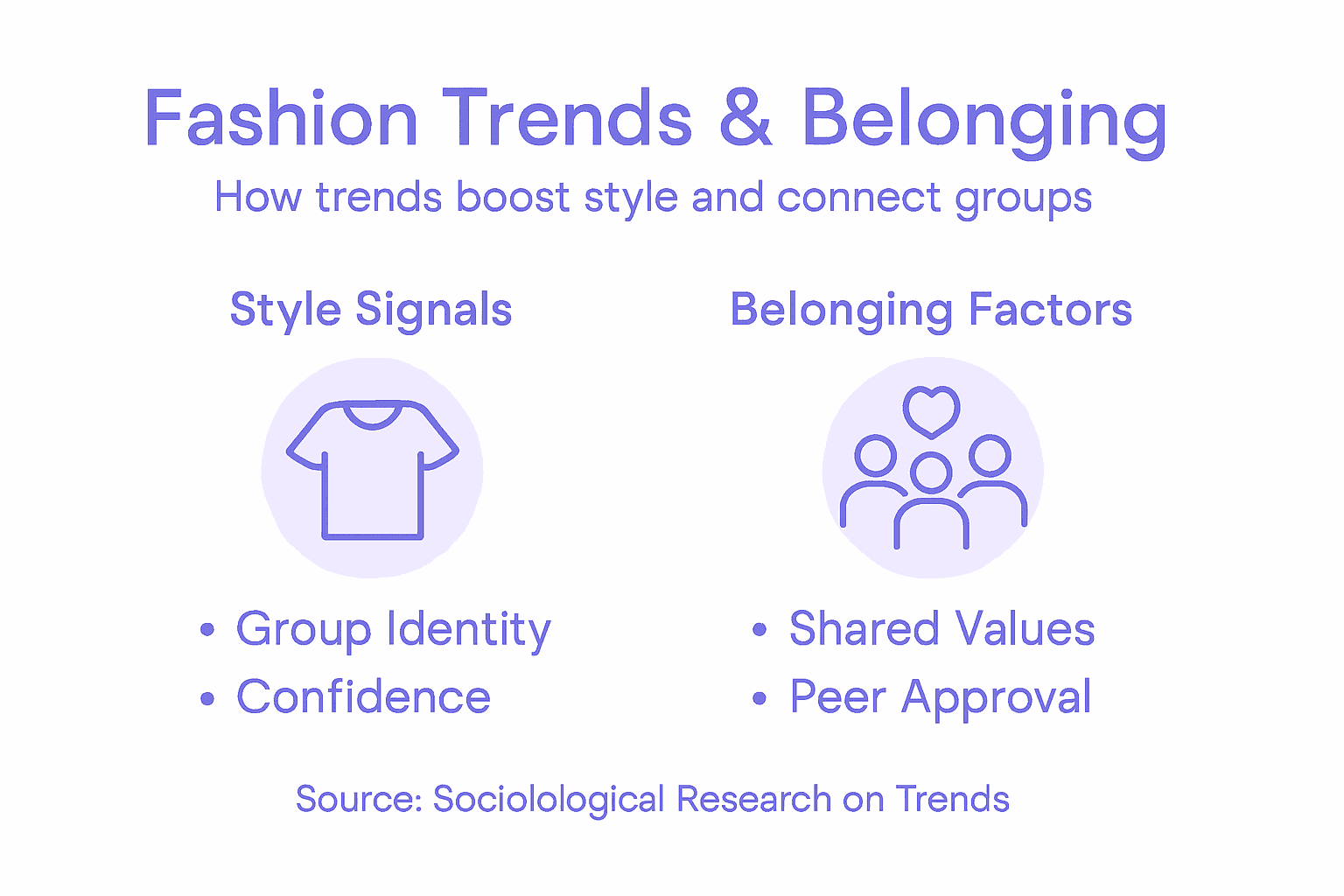
Fashion trends represent far more than simply updating your wardrobe. They are complex social signals that communicate identity, belonging, and cultural alignment. Fashion trends reflect dynamic societal values beyond mere clothing choices, serving as a sophisticated language of personal and group expression.
At its core, following fashion trends involves strategic social participation. Young adults use clothing as a nuanced communication tool that instantly broadcasts information about their personality, social group, and cultural connections. The styles we choose aren’t random - they’re carefully curated statements about who we are and where we belong.
The psychological dimensions of trend following are profound:
- Provides a sense of social connection
- Signals group membership
- Demonstrates cultural awareness
- Enables personal reinvention
- Creates visual dialogue with peers
Social belonging emerges as the most critical motivation. Sociological research shows trends negotiate group identity by creating visual markers that distinguish and unite communities simultaneously. When you adopt a trend, you’re essentially saying “I understand our shared culture” without speaking a word.
Pro tip: Choose fashion trends that genuinely resonate with your personal style rather than blindly following every seasonal shift.
Types of Fashion Trends in Modern Culture
Modern fashion trends represent a complex ecosystem of style influences that extend far beyond simple clothing choices. These trends emerge through intricate social, cultural, and technological channels, creating dynamic visual languages that communicate identity and belonging across different communities and generations.
Fashion experts typically categorize trends into several distinct types:
- Seasonal Trends: Short-term style shifts that change with each fashion season
- Microtrends: Highly specific, niche style movements lasting weeks or months
- Cultural Trends: Styles reflecting broader societal movements and values
- Subcultural Trends: Unique aesthetic expressions of specific social groups
- Technological Trends: Fashion innovations driven by new materials and manufacturing techniques
Trend forecasting research reveals that these trends are not random but carefully evolving narratives of social communication. Each trend wave represents a complex interaction between consumer behavior, technological innovation, and cultural zeitgeist.

Here’s a side-by-side view of fashion trend types and their primary drivers:
| Trend Type | Main Influence | Typical Longevity |
|---|---|---|
| Seasonal | Fashion industry calendars | A few months |
| Microtrend | Social media, celebrity culture | Weeks to months |
| Cultural | Societal shifts, global events | Several years |
| Subcultural | Specific group identities | Variable, often lasting |
| Technological | Material innovation, production | Years or ongoing |
Understanding these trend types allows individuals to navigate fashion more intentionally, selecting styles that genuinely resonate with their personal identity and social context. The most sophisticated fashion enthusiasts don’t just follow trends - they curate them.
Pro tip: Develop a personal style that selectively incorporates trends rather than completely transforming your wardrobe each season.
The Psychology Behind Trend Adoption
Psychological motivations drive our fashion choices far beyond simple aesthetic preferences. Trend adoption is a complex emotional and social process that reveals deep insights into human behavior, identity formation, and our fundamental need for connection and self-expression.
The primary psychological drivers of trend adoption include:
- Social Acceptance: Desire to feel included in peer groups
- Identity Expression: Using fashion as a personal communication tool
- Emotional Validation: Seeking emotional rewards through style choices
- Aspirational Positioning: Signaling desired social status
- Psychological Safety: Reducing anxiety by conforming to group norms
Consumer behavior research demonstrates that trend adoption is not about blindly following fashion, but strategically navigating social landscapes. Young adults especially use clothing as a nuanced method of communicating personal narratives, cultural affiliations, and individual creativity.
Understanding these psychological mechanisms empowers individuals to make more intentional fashion choices. Rather than being passive consumers, people can actively curate their personal style while maintaining an authentic sense of self.
Pro tip: Reflect on your personal motivations before adopting a trend to ensure it genuinely resonates with your identity.
Social and Economic Advantages of Staying Trendy
Fashion trends offer substantial social advantages that extend far beyond surface-level style choices. They represent powerful mechanisms for personal branding, social networking, and economic opportunity in today’s interconnected global landscape.
The key advantages of staying trendy include:
- Professional Credibility: Demonstrating contemporary awareness
- Network Expansion: Creating connections through shared aesthetic language
- Career Opportunities: Signaling adaptability and cultural intelligence
- Personal Confidence: Enhancing self-perception through strategic styling
- Cultural Relevance: Maintaining social and professional currency
Economic benefits of trend participation reveal deeper implications beyond individual perception. Trends create dynamic market ecosystems where consumers actively shape and are shaped by emerging style narratives, driving innovation and economic engagement.
Navigating fashion trends strategically allows individuals to transform clothing from mere fabric into a sophisticated communication tool. By understanding trend dynamics, young adults can leverage style as a form of personal and professional capital, creating opportunities through intentional self-presentation.
Compare how fashion trends impact both personal development and broader society:
| Impact Area | On Individuals | On Society |
|---|---|---|
| Social Connectivity | Builds peer networks | Strengthens group identity |
| Economic Effect | Drives personal spending | Fuels industry growth |
| Self-Expression | Enables style experimentation | Inspires cultural change |
| Adaptability | Encourages flexibility | Accelerates innovation |
Pro tip: Invest in versatile trend pieces that can be mixed and matched, maximizing both style impact and economic value.
Potential Pitfalls and Common Misconceptions
Fashion trend misconceptions can lead young adults into costly and unsustainable consumption patterns. Understanding these pitfalls is crucial for developing a mindful approach to personal style that balances trend awareness with individual authenticity and financial responsibility.
Key misconceptions about fashion trends include:
- Trend Equals Individuality: Believing following trends makes you unique
- More is Better: Assuming purchasing multiple trend pieces demonstrates style
- Constant Renewal: Thinking you must replace your wardrobe every season
- Cheap Equals Trendy: Equating low cost with fashionable choices
- One-Size-Fits-All: Believing trends work identically for everyone
Sustainable fashion research reveals deeper complexities beyond surface-level trend adoption. Many consumers misunderstand the environmental and ethical implications of their fashion choices, overlooking the broader impact of compulsive trend-following.
Navigating fashion trends requires critical thinking and self-awareness. Intelligent trend adoption means selecting pieces that complement your personal style, fit your lifestyle, and align with ethical consumption principles.
Pro tip: Invest in quality, versatile pieces that transcend seasonal trends rather than purchasing disposable, short-lived fashion items.
Elevate Your Style and Belonging with Intentional Trend Choices
Struggling to balance personal authenticity with the fast-paced world of fashion trends is a common challenge. This article highlights how following trends is not just about looking good but about signaling your identity and connecting with your community. At Lot27, we recognize the importance of curating your wardrobe with pieces that truly resonate with your style and social aspirations. Instead of constantly replacing your entire closet, explore our collection of versatile, trendy apparel designed to empower your personal expression without overspending or losing your unique voice.
Discover clothing that helps you communicate confidence and cultural relevance in everyday life. Browse the latest fashionable T-shirts, hoodies, and denim jeans at Lot27 and start building a style that blends the excitement of current trends with enduring personal value. Act now to transform your wardrobe thoughtfully and embrace trends that boost your social connections and professional presence. Visit Lot27 Shop today and step confidently into a style narrative crafted just for you.
Frequently Asked Questions
What are the main benefits of following fashion trends?
Following fashion trends can enhance social connections, signal group membership, demonstrate cultural awareness, enable personal reinvention, and create visual dialogue with peers.
How do fashion trends play a role in personal identity?
Fashion trends act as a communication tool that helps individuals express their personality, cultural affiliations, and desired identities, allowing them to connect with specific social groups.
What types of fashion trends should I be aware of?
Common types of fashion trends include seasonal trends, microtrends, cultural trends, subcultural trends, and technological trends, each influenced by different societal and technological factors.
How can I adopt fashion trends while maintaining my individuality?
To maintain individuality, selectively incorporate trends that resonate with your personal style, ensuring that your choices reflect who you are rather than purely following what’s popular.