

Finding the perfect casual look often feels like a balancing act between personal style and the sway of global trends. For young adults, fashion is more than just clothing—it’s a form of nonverbal communication that helps signal identity and foster community. Understanding the impact of fashion trends on self-expression and choice gives you the power to shape your style authentically, whether you’re inspired by Parisian streetwear or bold Japanese influences.
Table of Contents
- Defining Fashion Trends and Their Influence
- Types of Fashion Trends in Modern Culture
- How Trends Shape Personal Identity
- Fashion as a Tool for Self-Expression
- Risks of Blindly Following Trends
Key Takeaways
| Point | Details |
|---|---|
| Fashion Trends as Communication | Fashion trends serve as a nonverbal communication system, allowing individuals to express personal and cultural identities. |
| Impact of Digital Connectivity | Social media has democratized fashion, enabling rapid global trend dissemination and active consumer participation. |
| Identity Exploration through Fashion | Fashion choices allow for continuous identity exploration, helping individuals curate a blend of personal and cultural narratives. |
| Risks of Trend Conformity | Blindly following trends can lead to a loss of individual identity and financial strain, emphasizing the importance of personal authenticity in style. |
Defining Fashion Trends and Their Influence
Fashion trends are dynamic cultural expressions representing more than just clothing choices. They are powerful social indicators that reflect individual identity, group belonging, and collective values. These trends emerge through complex interactions between designers, influencers, consumers, and broader societal shifts.
At their core, fashion trends represent nonverbal communication systems that enable young adults to express complex personal narratives without speaking. Societal behavior patterns demonstrate how clothing choices communicate social status, cultural affiliations, and personal aesthetics. Young adults particularly leverage fashion as a strategic tool for self-representation and social connection.
Key aspects of fashion trends include:
- Rapid global dissemination through digital platforms
- Reflection of cultural and generational values
- Mechanism for individual and collective identity expression
- Continuous evolution driven by creative industries
Modern fashion trends have been dramatically transformed by social media and digital connectivity. Influencer-driven trend creation has democratized fashion, allowing instant global trend diffusion and enabling individuals to participate in worldwide style conversations.
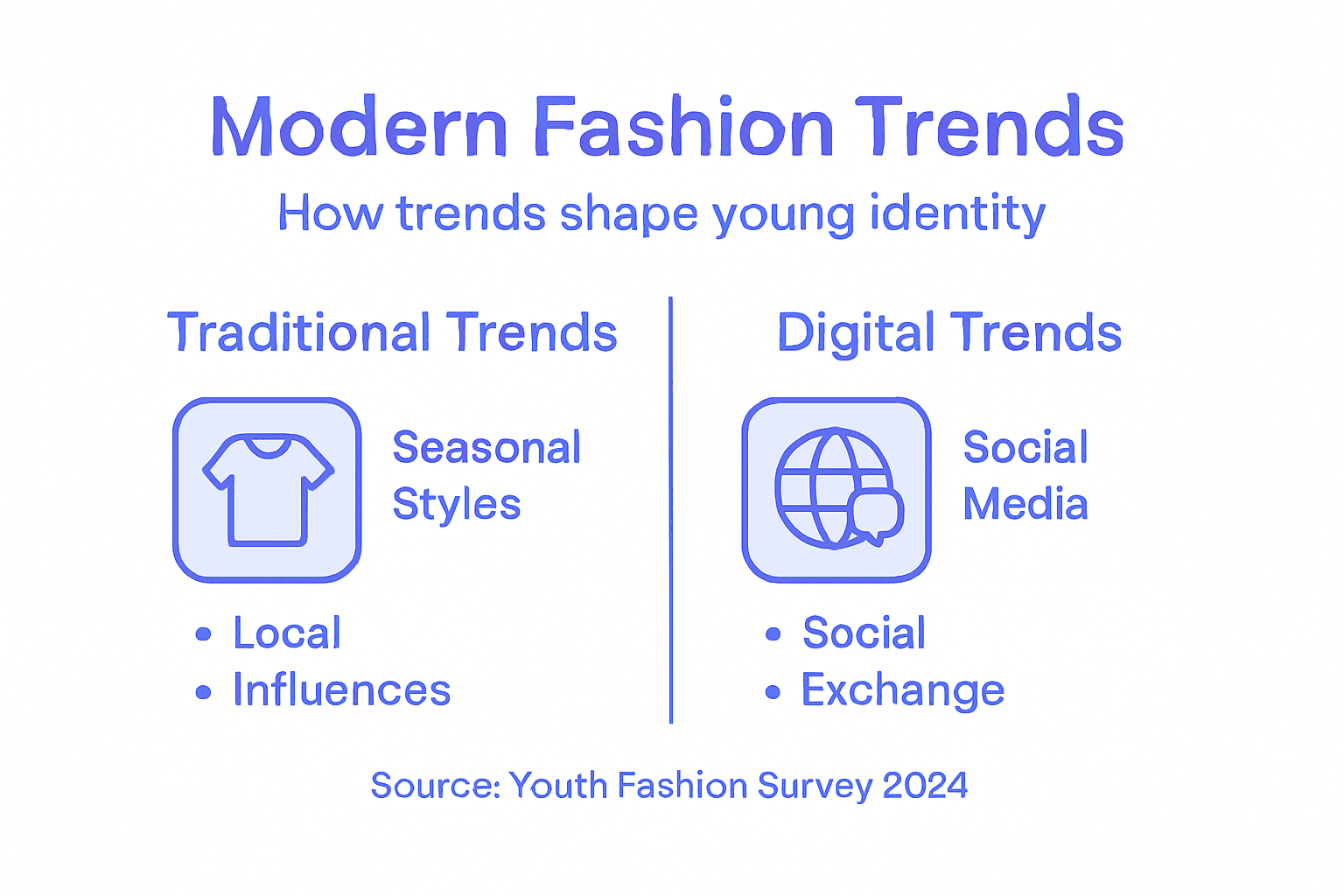
Here’s a quick comparison of traditional versus digital fashion trend dynamics:
| Aspect | Traditional Trends | Digital Trends |
|---|---|---|
| Spread Speed | Slow, seasonal | Instant, global |
| Trend Origin | Designers, magazines | Influencers, online |
| Accessibility | Exclusive, limited | Inclusive, open to all |
| Consumer Impact | Passive, observer | Active, participant |
Pro tip: Understand that fashion trends are more than superficial clothing choices - they’re powerful forms of personal and cultural communication.
Types of Fashion Trends in Modern Culture
Fashion trends represent complex, interconnected phenomena that extend far beyond simple clothing choices. Fashion trend forecasting reveals multiple dynamic categories that shape contemporary style landscapes, reflecting broader cultural and technological shifts.
Key types of fashion trends include:
- Seasonal Trends: Short-term style shifts that change with each fashion season
- Microtrends: Rapid, short-lived style movements often driven by social media
- Sustainable Fashion Trends: Environmentally conscious design approaches
- Cultural Fusion Trends: Styles blending multiple cultural aesthetic influences
- Digital-Native Trends: Fashion styles originating from online platforms and digital communities
Modern fashion trends are increasingly characterized by their interconnectedness and rapid evolution. Technological advancements and consumer behavior have transformed how trends emerge, spread, and get adopted by young adults worldwide. These trends now represent complex communication systems that go beyond mere clothing, serving as powerful expressions of individual and collective identity.
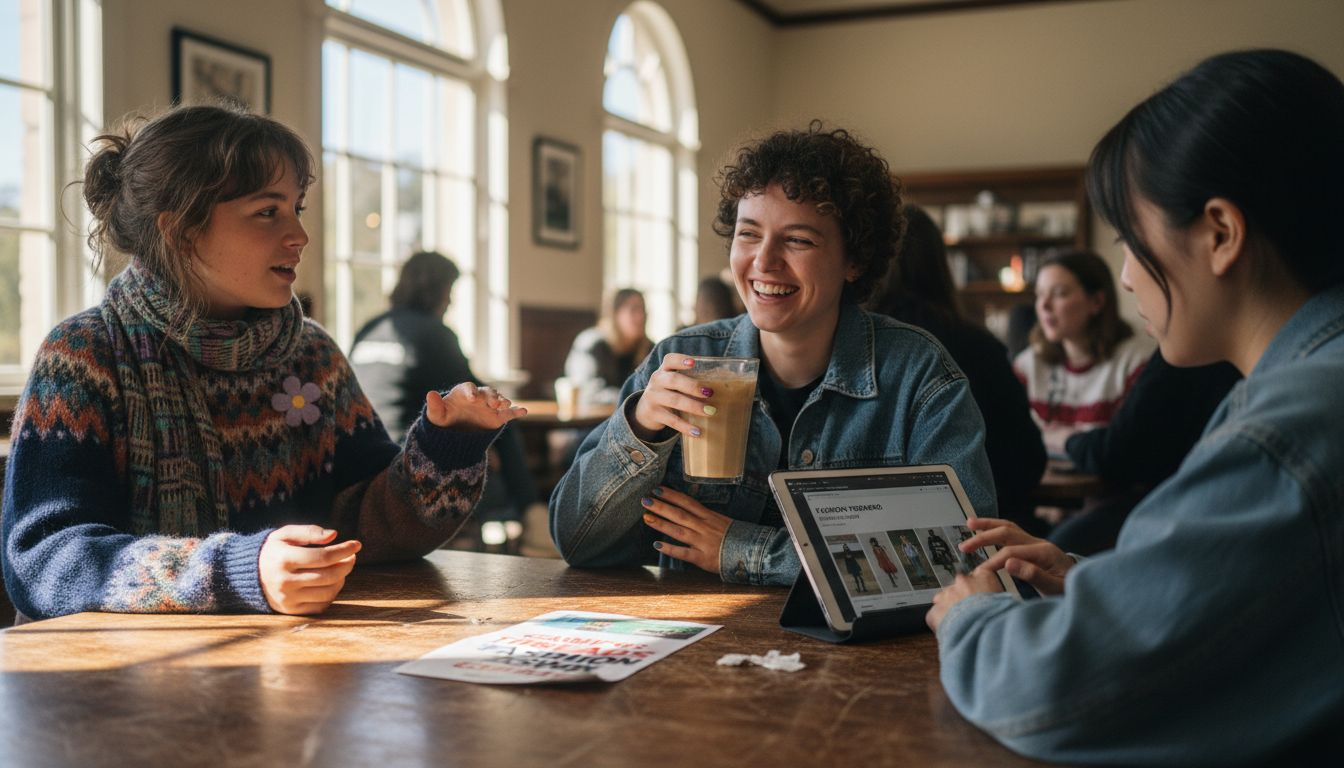
The digital age has fundamentally reshaped trend dynamics, creating unprecedented opportunities for global style exchanges. Young adults now participate in trend creation and dissemination through social media, blogs, and online communities, making fashion a more democratic and interactive experience.
Pro tip: Stay adaptable and view fashion trends as fluid expressions of cultural dialogue, not rigid rules to follow blindly.
How Trends Shape Personal Identity
Fashion identity represents a dynamic communication system where clothing becomes a powerful medium of self-expression. Personal identity through fashion reveals how individuals strategically use style choices to communicate complex social narratives and personal values.
Key ways fashion shapes personal identity include:
- Communicating cultural background
- Expressing individual personality
- Signaling social group membership
- Challenging or reinforcing societal norms
- Demonstrating personal values and beliefs
Global variations in fashion identity highlight how clothing transcends mere aesthetic choices. Young adults leverage fashion as a nuanced language, using style to negotiate their place within social contexts, challenge existing perceptions, and construct multifaceted representations of themselves.
Today’s fashion landscape offers unprecedented opportunities for self-definition. Digital platforms and global connectivity enable young adults to curate identities that blend personal creativity, cultural influences, and individual experiences. This fluid approach to fashion allows for continuous identity exploration and reinvention.
Pro tip: View your fashion choices as a dynamic form of personal storytelling, not just clothing selections.
Fashion as a Tool for Self-Expression
Nonverbal communication through clothing offers young adults a profound platform for personal storytelling. Fashion as self-expression reveals how style choices become powerful narratives that communicate complex emotional and psychological landscapes without uttering a single word.
Key dimensions of fashion self-expression include:
- Emotional state representation
- Cultural heritage celebration
- Personal values demonstration
- Psychological empowerment
- Social group affiliation signaling
Personal creativity through fashion design transforms clothing from mere fabric into a dynamic canvas of individual experience. Young adults strategically curate wardrobes that serve as visual metaphors, allowing them to experiment with identity, challenge societal expectations, and communicate nuanced aspects of their inner worlds.
Modern fashion platforms have democratized self-expression, enabling individuals to transcend traditional aesthetic boundaries. Digital connectivity and global fashion ecosystems provide unprecedented opportunities for young adults to explore, remix, and redefine personal style narratives continuously.
Pro tip: Treat your wardrobe as a living, evolving autobiography that speaks volumes about your journey.
Risks of Blindly Following Trends
Trend conformity represents a significant psychological and social challenge for young adults navigating the complex world of fashion. Psychological risks of trend adoption reveal how uncritical fashion choices can lead to profound personal and economic consequences that extend far beyond clothing selection.
Key risks of blindly following trends include:
- Loss of individual identity
- Financial strain from constant purchasing
- Environmental sustainability challenges
- Psychological pressure to conform
- Suppression of personal creativity
Fast fashion’s environmental impact highlights the broader consequences of trend-driven consumption. Young adults who mindlessly chase fashion trends often find themselves trapped in a cycle of continuous purchasing, contributing to significant waste and perpetuating unsustainable consumer behaviors that harm both personal finances and global ecosystems.
To better understand the risks of trend conformity, see how they affect different areas of life:
| Area Impacted | Example Risk | Long-Term Consequence |
|---|---|---|
| Personal Identity | Loss of uniqueness | Reduced self-esteem |
| Financial Wellbeing | Frequent purchases | Accumulated debt |
| Environmental Health | Unsustainable consumption | Increased textile waste |
| Creative Freedom | Suppressed originality | Limited self-expression |
Critical self-reflection becomes essential in navigating fashion trends. Understanding that true style emerges from personal authenticity, not wholesale trend adoption, empowers young adults to make intentional, meaningful fashion choices that genuinely represent their unique identities and values.
Pro tip: Develop a personal style that reflects your authentic self, not just the latest trending aesthetic.
Embrace Your Unique Style with Trend-Forward Streetwear
Navigating fashion trends means more than just following what is popular it is about expressing your authentic self and shaping your personal identity. This article highlights how blindly chasing trends can lead to lost creativity and unnecessary spending. At Lot27, we understand the importance of using fashion as a powerful form of self-expression instead of mere conformity. Our collection of Womens T-Shirts & Tops – Premium Streetwear offers staple pieces that let you build a wardrobe that tells your story and adapts as you evolve.
Take control of your style journey now and explore handpicked apparel designed for young adults who want to communicate their values and individuality clearly. With versatile options like Sweatshirts - everyday streetwear and Womens Cropped Hoodies – Luxury Streetwear, each piece supports your unique identity without overwhelming your budget or the planet. Visit Lot27 today to discover your next look that balances trend awareness with personal authenticity.
Frequently Asked Questions
What are fashion trends and why are they important for young adults?
Fashion trends are dynamic cultural expressions that allow young adults to communicate personal identity and social belonging through clothing choices. They reflect individual values, collective beliefs, and cultural affiliations, making them significant in shaping self-expression.
How do social media influence modern fashion trends?
Social media has transformed fashion trends by enabling instant global dissemination. Influencers play a crucial role in trend creation, democratizing fashion and allowing individuals to engage actively in worldwide style conversations.
What are the risks of blindly following fashion trends?
Blindly following fashion trends can lead to a loss of individual identity, financial strain from constant purchasing, and environmental sustainability challenges. It may also suppress personal creativity and create psychological pressure to conform to societal standards.
How can young adults use fashion to express their personal identity?
Young adults can use fashion as a nonverbal communication tool to represent their cultural background, individual personality, and values. By curating wardrobes that reflect their unique experiences, they can negotiate social identities and challenge societal norms.