

Struggling to create trendy, affordable casual outfits that express your personal style? You’re not alone. Research shows 70% of young adults report frustration from common styling mistakes like color overuse and poor fit. This guide breaks down simple, actionable mix-and-match techniques to help you build a versatile wardrobe and coordinate outfits with confidence, transforming your casual style without breaking the bank.
Table of Contents
- Prerequisites: What You Need Before Starting
- Core Steps: Matching Colors and Patterns
- Core Steps: Layering Techniques
- Core Steps: Accessorizing Casual Outfits
- Troubleshooting: Common Mistakes and Fixes
- Expected Results: Measuring Style Success
- Upgrade Your Wardrobe with Lot27’s Trendy Essentials
- FAQ
Key Takeaways
| Point | Details |
|---|---|
| Essential Base | T-shirts, hoodies, and denim create your versatile foundation for endless outfit combinations. |
| Color Balance | Apply the 60-30-10 rule: 60% neutral, 30% secondary, 10% accent for harmonious looks. |
| Smart Layering | Combine 2-3 pieces to add depth and adaptability without overwhelming your outfit. |
| Minimal Accessories | Stick to 1-2 simple accessories to enhance style without creating clutter. |
| Avoid Common Errors | Prevent color overuse, poor fit, and over-accessorizing for polished, trendy results. |
Prerequisites: What You Need Before Starting
Before diving into trendy outfit coordination, you need the right foundation pieces in your wardrobe. Start by gathering versatile casual essentials that work across multiple outfit combinations. Versatile core pieces like T-shirts, hoodies, and denim jeans produce up to 35% cost savings and higher style adaptability.
Building your base wardrobe doesn’t require massive spending. Focus your budget on items with maximum mix-and-match potential rather than trendy pieces that quickly go out of style. A capsule wardrobe approach lets you create dozens of outfits from 10 to 15 core items, dramatically increasing your style options while keeping costs manageable.
Here’s what you need to gather before starting:
- Core tops: 3 to 5 neutral T-shirts in white, black, gray, and navy that serve as your outfit foundation
- Versatile bottoms: 2 to 3 pairs of well-fitting denim jeans in classic washes that pair with everything
- Layering pieces: 2 lightweight hoodies or jackets for adding dimension to basic looks
- Basic accessories: 1 to 2 minimalist items like a simple watch or hat for finishing touches
Understanding basic color coordination principles is crucial before you start mixing pieces. Learn which colors naturally complement each other and which neutrals work as your outfit base. This knowledge prevents costly wardrobe mistakes and helps you shop smarter.
Exploring trending T-shirt styles and affordable apparel alternatives helps you identify which pieces offer the best value for your budget. Start small with a flexible capsule approach, then expand as you master coordination techniques.
Once you have these essentials, check out denim jeans styling tips to maximize the versatility of your foundation pieces.
Core Steps: Matching Colors and Patterns
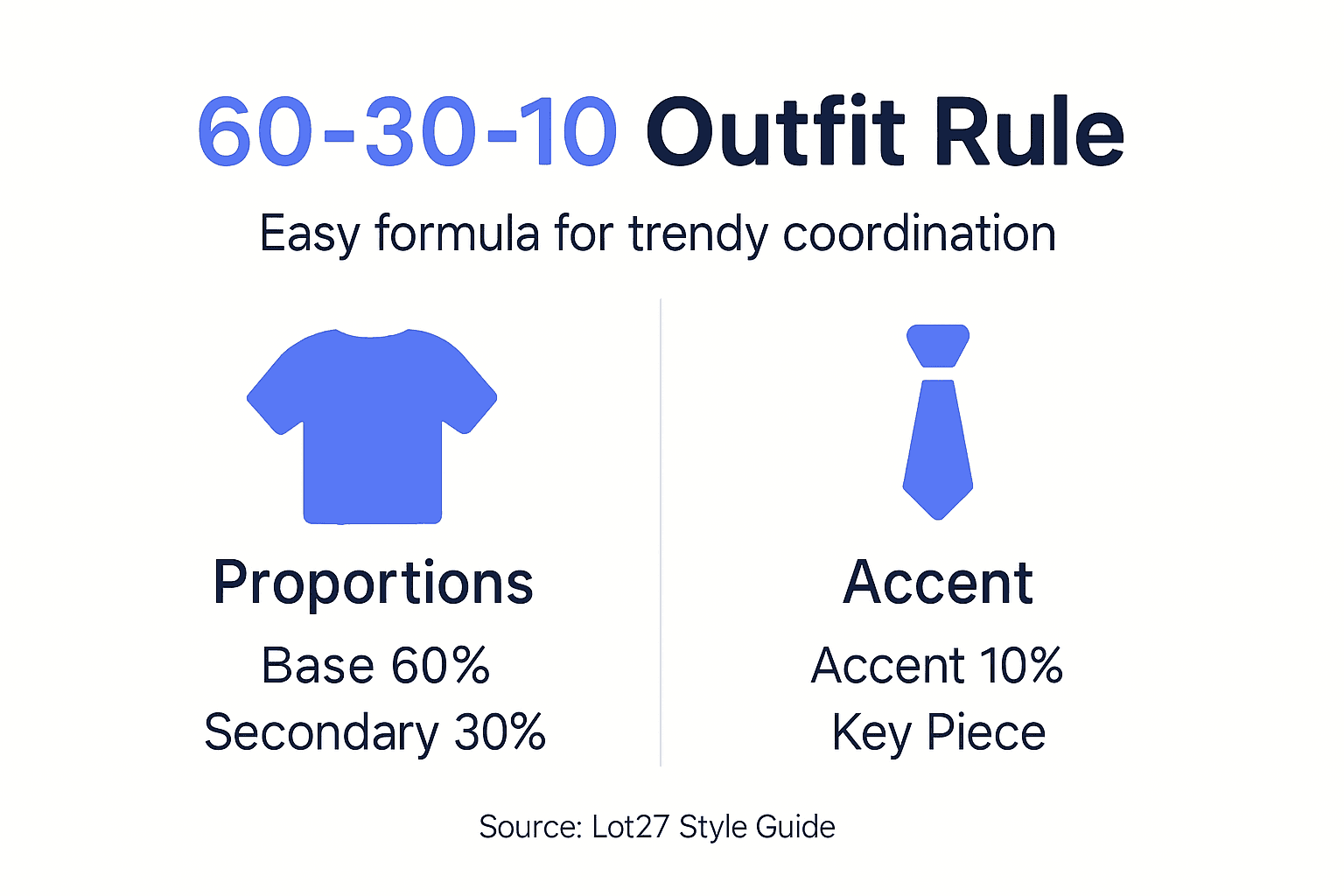
Mastering color and pattern coordination transforms basic wardrobe pieces into stylish outfits. The 60-30-10 rule provides a foolproof framework that makes outfit coordination simple and effective. Using a 60-30-10 color distribution improves beginner styling success to 85%.
Here’s how to apply the rule:
- Choose your neutral base (60%): Select one neutral color like black, white, gray, or navy for your largest piece, typically pants or a dominant top.
- Add secondary color (30%): Pick a complementary color for your second-largest element, such as a jacket or layering piece.
- Include accent color (10%): Finish with a bold accent through accessories or a small clothing detail that adds visual interest.
Start with neutrals and introduce just one accent color for coherence. This approach prevents the color overload mistake that affects 70% of casual styling attempts. Your neutral foundation gives you flexibility while the accent adds personality without overwhelming the look.
| Color Combination | Base (60%) | Secondary (30%) | Accent (10%) | Style Effect |
|---|---|---|---|---|
| Classic Casual | Gray T-shirt | Navy denim | White sneakers | Clean, versatile |
| Bold Street | Black hoodie | Gray joggers | Red cap | Edgy, modern |
| Relaxed Weekend | White tee | Light denim | Brown belt | Easy, approachable |
Mixing patterns requires careful attention to scale. Pair a small-scale pattern like thin stripes with a large-scale pattern like bold plaid to create stylish contrast without visual chaos. Keep pattern colors within your chosen color scheme to maintain harmony.
Limit your accent colors strictly. Using more than one or two accent colors creates confusion and dilutes your outfit’s impact. Stick to the 60-30-10 distribution religiously until it becomes second nature.
Explore smart T-shirt outfit ideas and graphic tee styling tips to see this rule in action. For shopping guidance that reinforces these principles, check the step-by-step T-shirt shopping resource.
Pro Tip: Photograph your outfit before heading out. If any color or pattern jumps out awkwardly in the photo, adjust it. Your camera reveals imbalances your eye might miss.
Core Steps: Layering Techniques
Layering adds visual complexity and practical adaptability to your casual outfits without requiring a larger wardrobe. Incorporating layering with 2-3 pieces increases outfit versatility and complexity, helping to avoid stylistic stagnation.
The key is strategic restraint. Too many layers create bulk and visual clutter, while too few leave your outfit flat and one-dimensional. Two to three pieces hit the sweet spot where you add dimension while maintaining comfort and style.
Start with these layering fundamentals:
- Base layer: Choose a well-fitting T-shirt in a neutral color that works as your foundation
- Mid layer: Add a lightweight hoodie, cardigan, or denim jacket that complements your base
- Optional outer layer: Include a third piece only when weather or style demands it, keeping the look intentional
- Texture variety: Mix materials like cotton, fleece, and denim to create visual interest through texture contrast
Begin your layering journey with lightweight hoodies or jackets. These pieces integrate seamlessly into casual looks and provide temperature flexibility throughout the day. A simple gray hoodie over a white tee with denim jeans creates instant depth while remaining effortlessly casual.

Seasonal updates keep your layered outfits fresh and appropriate. Spring calls for lighter fabrics and brighter accent colors. Fall invites richer tones and slightly heavier materials. You don’t need a complete wardrobe overhaul; swapping one or two pieces refreshes your entire rotation.
Avoid the temptation to add layers just because you own them. Each piece must serve a purpose, either functional warmth or stylistic enhancement. Unnecessary layers add bulk without benefit, undermining the clean lines that make casual outfits work.
Layering extends your wardrobe’s versatility exponentially. That same white tee works alone in summer, under a hoodie in fall, and beneath a jacket in winter. You’re creating dozens of outfit combinations from minimal pieces, maximizing value without additional spending.
Discover casual layering tips and denim layering ideas to expand your technique repertoire.
Pro Tip: Test your layered outfit by sitting, walking, and reaching. If any layer bunches awkwardly or restricts movement, remove it. Comfort directly impacts confidence and how you carry your style.
Core Steps: Accessorizing Casual Outfits
Accessories complete your outfit coordination, but restraint separates stylish looks from cluttered ones. Research indicates that over-accessorizing causes 40% of casual outfit mistakes, making less genuinely more when finishing your look.
The golden rule: stick to one or two minimalist accessories maximum. A simple watch, clean sneakers, a subtle hat, or understated jewelry adds personality without competing for attention. Each accessory should enhance your outfit’s story rather than rewriting it.
Select accessories that balance function with style:
- Watches: Choose simple designs in neutral metals that complement multiple outfits rather than statement pieces
- Hats: Baseball caps or beanies add casual edge while serving practical sun or warmth purposes
- Jewelry: Limit to one subtle piece like a thin chain or simple ring that adds interest without distraction
- Footwear: Clean, well-maintained sneakers in neutral or complementary colors ground your entire look
Accessory placement matters as much as selection. A watch on one wrist balanced by a simple bracelet on the other creates intentional symmetry. Random placement of multiple accessories creates visual noise that undermines your coordinated outfit.
Keep accessory colors coherent with your outfit’s color scheme. If you’re working with a black and gray base with white accents, silver-toned accessories harmonize better than gold. This doesn’t mean perfect matching; it means thoughtful coordination.
“The best accessory is confidence. When you feel your outfit works, that assurance shows and elevates everything you wear.”
Functional accessories earn priority over purely decorative ones. A quality backpack, practical belt, or comfortable shoes serve real needs while contributing to your style. Decorative-only pieces rarely justify the visual space they consume in casual outfits.
Your accessories should reflect your personal style consistently. If minimalism defines your aesthetic, ornate pieces feel out of place no matter how trendy. Choose accessories that authentically represent you rather than chasing every accessory trend.
Learn more through accessory styling tips and explore minimalist accessory ideas that complement casual wardrobes perfectly.
Troubleshooting: Common Mistakes and Fixes
Even with solid techniques, certain styling errors repeatedly trip up casual outfit coordination. Recognizing these mistakes early and knowing quick fixes saves time, money, and styling frustration.
Color overuse remains the most frequent error. When you introduce too many colors, your outfit loses focus and coherence. The fix is simple: return to the 60-30-10 distribution rule. Strip your outfit down to neutrals, then deliberately add back one secondary and one accent color.
Poor garment fit undermines even perfectly coordinated color schemes:
- Too loose: Creates sloppiness that reads as careless rather than casual
- Too tight: Appears uncomfortable and restricts natural movement
- Wrong length: Throws off proportions and balance in your silhouette
- Solution: Invest in basic alterations or size correctly when shopping
Over-accessorizing clutters your look quickly. If you’re questioning whether an accessory works, remove it. Your instinct recognizes when you’ve crossed from enhanced to excessive. Limit strictly to one or two pieces that serve clear purposes.
| Common Mistake | Why It Fails | Quick Fix |
|---|---|---|
| Using 4+ colors | Creates visual chaos | Stick to 60-30-10 rule |
| Poor fit | Looks sloppy or uncomfortable | Alter or size correctly |
| 3+ accessories | Clutters and distracts | Remove to 1-2 pieces |
| Clashing patterns | Overwhelms the eye | Use different scales |
| Ignoring proportions | Unbalanced silhouette | Match fitted with relaxed |
Pattern mixing goes wrong when scales match too closely. Two medium-sized patterns compete rather than complement. The fix: pair contrasting scales like small polka dots with large stripes, keeping colors coordinated.
Proportions matter more than most people realize. Pairing a fitted top with fitted bottoms creates a restrictive look, while loose on loose appears shapeless. Mix fitted pieces with relaxed ones for balanced, intentional styling.
Find solutions for correcting fit issues and fixing pattern clashes to refine your coordination skills.
Pro Tip: Take photos of outfits that work and those that don’t. Review them weekly to identify your personal pattern of mistakes. This visual feedback accelerates your learning curve dramatically.
Expected Results: Measuring Style Success
Applying these outfit coordination techniques produces measurable improvements in how you present yourself and how others respond to your style. Success isn’t just feeling better; it shows up in concrete ways you can track.
Expect positive social media engagement to increase 20 to 30% as your outfit coordination improves. Better-coordinated looks photograph more appealingly, generating more likes, comments, and follows. Your online style presence strengthens naturally when your outfits demonstrate intentional coordination.
Personal confidence grows as you master these techniques:
- Decision speed: Outfit selection time drops from 15-20 minutes to under 5 minutes
- Purchase confidence: You buy pieces knowing exactly how they fit your existing wardrobe
- Style expression: Your unique aesthetic emerges clearly through consistent coordination
- Social comfort: Reduced outfit anxiety lets you focus on interactions rather than appearance concerns
Wardrobe satisfaction increases dramatically when every piece works with multiple others. Your cost per wear drops significantly as you rotate items more frequently. That feeling of “nothing to wear” disappears when your capsule wardrobe generates dozens of coordinated combinations.
Outfit cohesion becomes second nature after applying these principles consistently for 3 to 4 weeks. You’ll notice improved harmony in color distribution, better proportion balance, and cleaner overall aesthetics. Fashion mistakes that once seemed inevitable become rare exceptions.
Feedback from friends, family, and online connections provides valuable validation. Pay attention to specific compliments about your style improvement. These observations confirm your techniques are working and help you identify which coordination elements resonate most.
Use self-assessment regularly to refine your approach. Photograph your outfits weekly and review them monthly. Notice which combinations generate the best results and which still need work. This reflection cycle accelerates your mastery.
Explore style success indicators to benchmark your progress and identify areas for continued improvement.
Upgrade Your Wardrobe with Lot27’s Trendy Essentials
Ready to put these coordination techniques into practice? Lot27 offers affordable, versatile essentials perfectly aligned with this guide’s styling principles. Our collection focuses on mix-and-match core pieces that maximize your outfit options while respecting your budget.
Discover our Mens Essential Cotton T-Shirt in multiple neutral colors that serve as your outfit foundation. Pair them with our comfortable Vintage Washed Fleece Joggers for effortless casual style. Each piece is designed with the versatility and quality you need to build a wardrobe that works.
Our styling blog provides ongoing guidance to help you coordinate your new pieces confidently. Check out our denim jeans styling guide for specific pairing ideas that bring these techniques to life with your Lot27 wardrobe.
FAQ
How Do I Choose the Right Accent Color for My Outfit?
Choose accent colors that naturally complement your neutral base while reflecting your personal style preferences. Start with one bold color for easy coordination and balanced visual interest. Test different accent color tips to find combinations that resonate with your aesthetic.
What Are Simple Ways to Mix Patterns Without Clashing?
Mix patterns using contrasting scales, like pairing small stripes with large plaid or checks. Limit pattern colors to your outfit’s established color scheme to maintain harmony and prevent visual competition. Review pattern mixing strategies for detailed examples.
How Can I Avoid Over-Accessorizing My Casual Outfit?
Stick strictly to one or two minimalist accessories that serve functional and stylistic purposes. Choose pieces that complement your outfit’s colors and overall aesthetic to maintain visual balance. Follow minimalist accessorizing tips to refine your approach.
How Long Does It Take to Master Outfit Coordination?
Most people see noticeable improvement within 3 to 4 weeks of consistent practice with these techniques. Daily application builds intuition faster than occasional styling sessions. Your coordination skills become automatic as you internalize the 60-30-10 rule and layering principles.
Can I Apply These Techniques to Professional Casual Settings?
Yes, these core principles translate directly to business casual environments with minor adjustments. Swap casual hoodies for structured blazers and joggers for chinos while maintaining the same color distribution and layering logic. The coordination fundamentals remain consistent across dress codes.